WHITE SHARKS IN CANADA
Following the seasonal journeys of the North Atlantic’s most iconic predator.PART 1Atlantic Shark Expeditions
Studying Nova Scotia’s Seasonal White Sharks
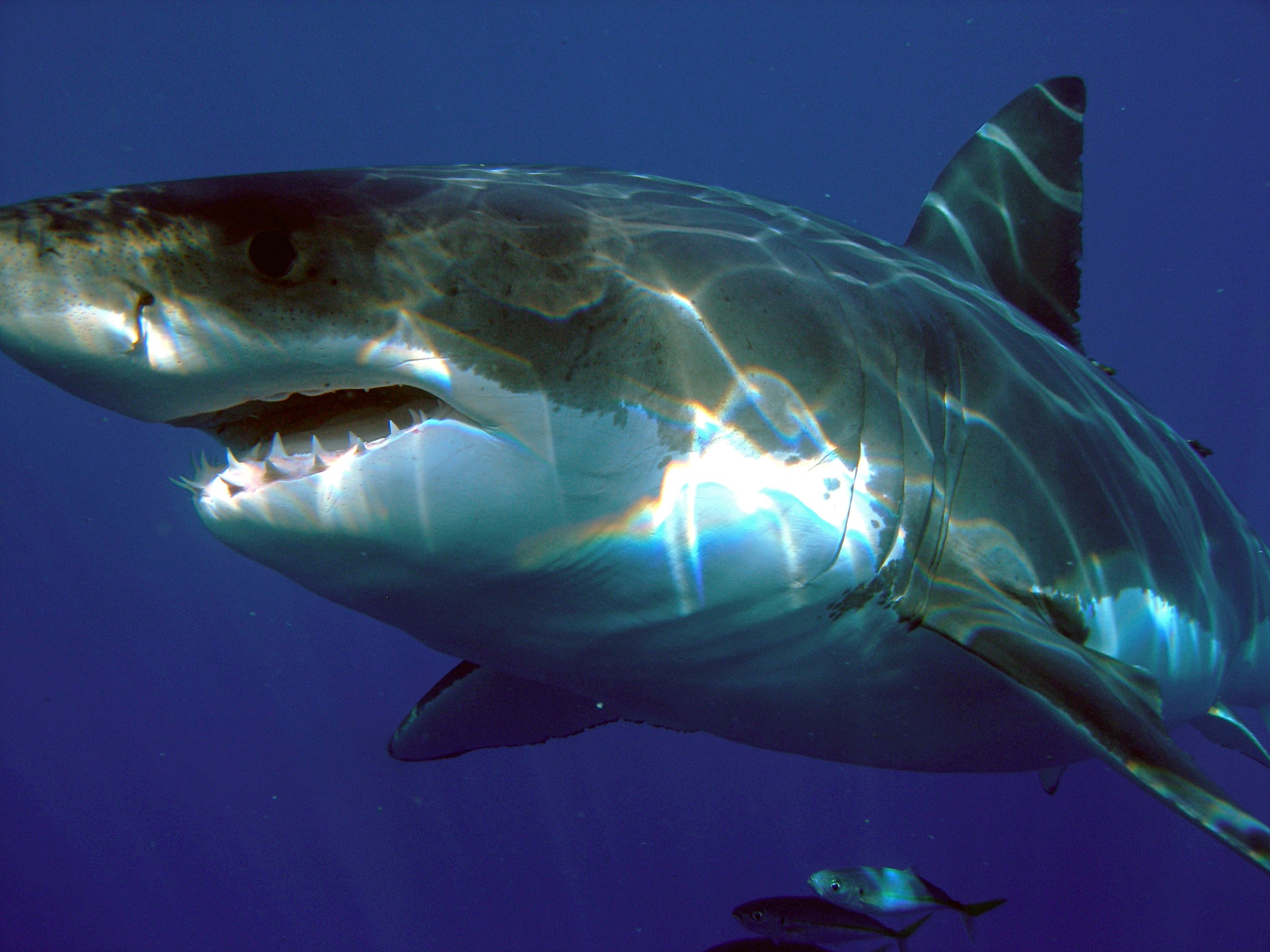
Off the coast of Nova Scotia, encounters with one of the ocean’s most misunderstood predators are becoming something more than an extraordinary wildlife experience. They are becoming opportunities for science.
For generations, the great white shark has occupied an unusual place in our imagination. It is simultaneously one of the most recognizable animals on Earth and one of the least understood.
Along Canada’s Atlantic coast, that knowledge gap is particularly important.
White sharks (Carcharodon carcharias) regularly move into Atlantic Canadian waters, including waters around Nova Scotia, yet many fundamental questions remain about where they concentrate, how long they remain, which habitats are most important to them, how individuals return to particular areas, and how environmental changes may influence their movements.
Those are not simply questions of curiosity. Canada’s Atlantic population of white sharks has been listed as Endangered under the federal Species at Risk Act since 2011. Understanding where these animals travel and which Canadian habitats they depend upon is an important part of determining how they can be effectively protected.
A Nova Scotia organization is helping scientists look for some of those answers.
Atlantic Shark Expeditions was established in 2023 by marine ecologist and shark researcher Dr. Neil Hammerschlag. The organization combines shark viewing and cage diving with scientific research, education and citizen science, turning its vessel into something resembling a seasonal floating field station.
And the sharks themselves are beginning to tell their stories.
You have to find the sharks first.
White sharks are highly mobile animals occupying an enormous three-dimensional environment. A researcher standing on a Nova Scotia shoreline may know that sharks are somewhere offshore, but locating the same individuals repeatedly—often enough to understand population patterns—is another challenge entirely.
Atlantic Shark Expeditions repeatedly visits shark habitat during the season, providing scientists with opportunities to photograph individual animals, document sightings, observe behaviour and collect information over time. ASE says its research program includes photo identification, monitoring abundance trends and investigating aspects of shark biology in Atlantic Canadian waters.
During the organization’s first season in 2023, Hammerschlag reported observing 36 white sharks and hundreds of blue sharks. Those observations were intended in part to begin creating baseline information against which future changes could eventually be compared.
Seeing more sharks does not automatically mean that a population has suddenly exploded. Detection can change because researchers are looking more often, technology improves, prey distributions change, environmental conditions shift, or sharks alter where and when they use particular habitats.
Long-term data allow scientists to begin separating those possibilities. And long-term data usually start with someone being on the water.
One of the simplest tools may become one of the most valuable: a camera.
ASE marine biologists, scientists and guests photograph sharks encountered during expeditions. Images can contribute to photo-identification efforts, helping researchers distinguish individual sharks and potentially recognize animals that return in subsequent years. The organization also documents sightings and field observations relating to shark behaviour and biology.
Over enough seasons, those encounters can begin answering much bigger questions. Does the same shark return to southwestern Nova Scotia every summer? Do males and females use the region differently? Do younger sharks favour different habitats from large adults? How long do individuals remain? Are there islands, banks or coastal features that repeatedly attract them?
These are exactly the kinds of questions that sustained identification and tracking programs can eventually help scientists answer.
- Dorsal-fin profile
- Pigmentation pattern
- Scars and injuries
- Repeat encounters
PHOTOGRAPH → INDIVIDUAL → HISTORY
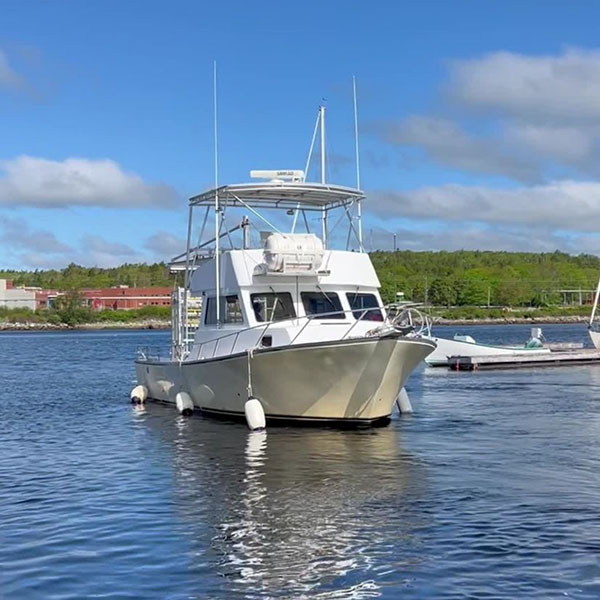
Photo provided by Atlantic Shark Expeditions — used with permission.
Science, tourism and conservation can share the same boat.
Atlantic Shark Expeditions’ relationship with the nonprofit Shark Research Foundation pushes this model beyond observation.
The two organizations collaborate on research aimed at understanding how sharks and the ecosystems they influence are responding to fishing, habitat change and climate change. For Atlantic Canadian white sharks, their stated goals include population surveys and satellite tagging intended to identify movement patterns, important habitats and potential threats associated with fisheries, aquaculture and tidal-energy development.
Researchers from institutions including Dalhousie University have also participated aboard ASE expeditions to investigate the health of local shark populations.
The guests who come hoping to see a white shark help make repeated days at sea possible. Those days create research opportunities. Those opportunities generate observations. Those observations can eventually become datasets capable of informing conservation.
Tagging Salvager without capture or restraint.
In October 2025, scientists with the Shark Research Foundation successfully fitted a free-swimming white shark in Canadian waters with a fin-mounted satellite transmitter without first capturing or restraining the animal. Atlantic Shark Expeditions provided in-kind support.
The shark was a roughly 14-foot female named Salvager.
Traditionally, dorsal-fin transmitters are often attached after a shark has been brought alongside a vessel and temporarily restrained. Hammerschlag instead adapted technology originally developed for remotely tagging whales and dolphins. A veterinary-grade CO₂-powered applicator attached the transmitter to Salvager’s dorsal fin with titanium darts while she remained free-swimming.
Methods that reduce or eliminate capture and restraint may create new opportunities to study large sharks while reducing handling. Once the transmitter was deployed, Salvager effectively became a researcher herself.
A free-swimming shark became a moving source of ecological information.
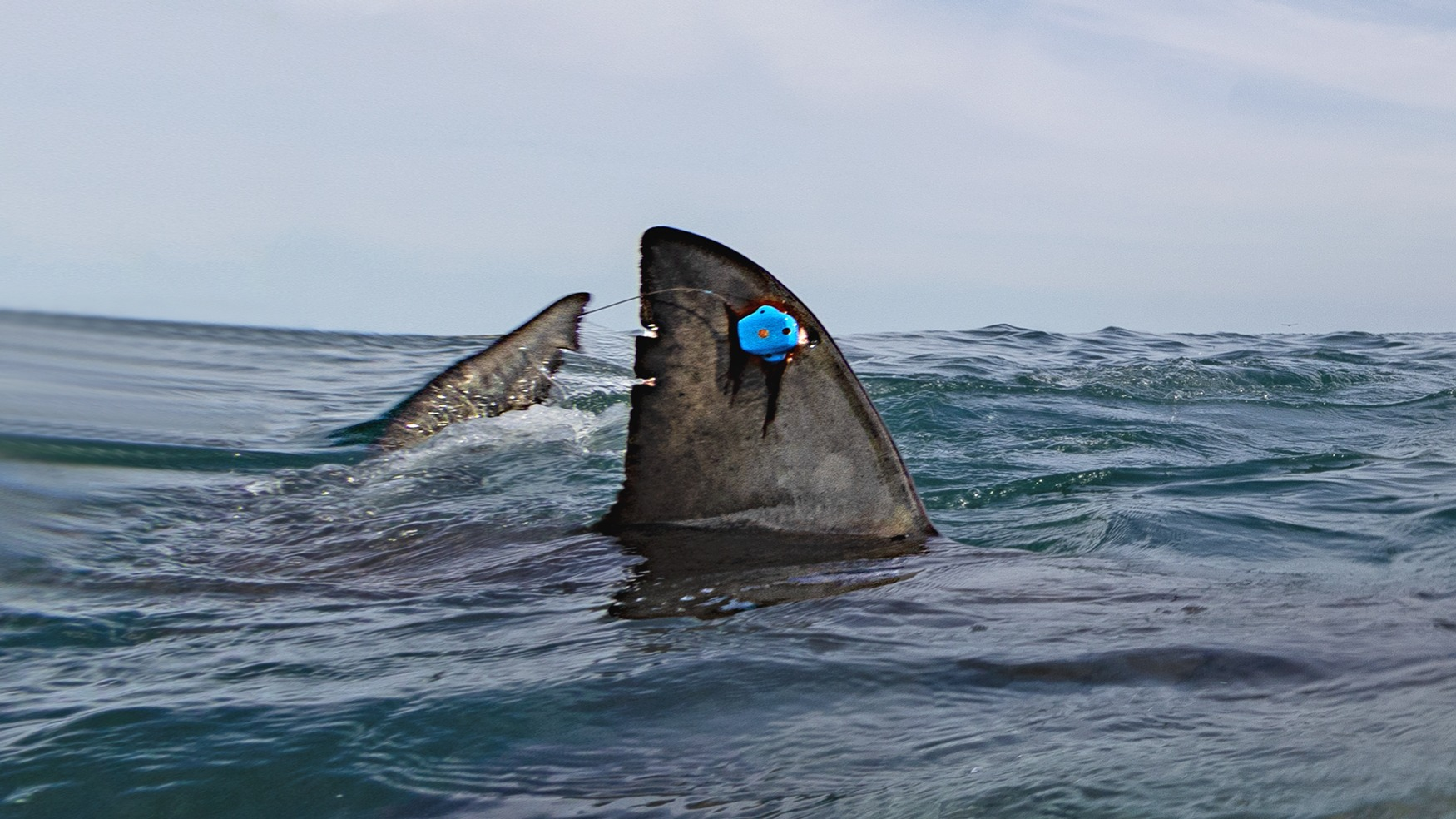
Photo provided by Atlantic Shark Expeditions — used with permission.
Dots on a map can become evidence.
Satellite tags used by the Shark Research Foundation transmit through the Argos satellite system when a shark’s dorsal fin breaks the surface long enough to establish communication.
The resulting locations allow scientists to reconstruct portions of the animal’s movements. Depending on tag life, conditions and shark behaviour, these transmitters can potentially function for months or even years.
In October 2025, the Foundation reported that Salvager initially remained relatively close to the remote islands near southwestern Nova Scotia where she had been tagged, although she also ventured into the Bay of Fundy. Her early track suggested those outer islands could be particularly important habitat for that individual.
One shark cannot define habitat for a population. But one shark provides a clue. Another adds another track. Eventually, patterns can reveal migration corridors, seasonal feeding areas or habitats requiring additional study and protection.
The public can follow tagged sharks through the Foundation’s Live Shark Tracking platform.
Science conducted from Atlantic Canada, throughout the season.
Atlantic Canada is not simply somewhere that white sharks occasionally wander. Previous tracking research has shown that some North Atlantic white sharks repeatedly return during summer and autumn. Earlier Canadian expeditions between 2018 and 2021 tagged 36 white sharks, and tracking showed that individuals could preferentially use Atlantic Canada as a summer feeding area—behaviour consistent with site fidelity or philopatry.
Organizations operating from Nova Scotia are increasing the ability to observe these animals locally and repeatedly, in the habitats they are actually using.
The more we understand those habitats, the better positioned conservation managers will be to ask where sharks are most vulnerable to fishing interactions, which areas deserve attention, how warming waters affect arrival and departure, whether prey distributions are changing, and whether some habitats are disproportionately important to mature females.
Those answers will take years. But the work has begun.
A dorsal fin becomes an individual.
For decades, the white shark has been portrayed primarily as a threat to people. Atlantic Shark Expeditions deliberately approaches the animal differently. Guests encounter marine biologists, participate in citizen science, and see sharks behaving in their natural environment rather than through sensational television or headlines.
People rarely fight to protect animals they have been taught only to fear. But fear can change when an animal becomes understood.
A dorsal fin becomes an individual. An individual becomes a track across an ocean. That track reveals an animal migrating thousands of kilometres through waters belonging to multiple countries—returning season after season to the same places.
Suddenly the “monster” becomes something considerably more interesting: a neighbour.
Atlantic Shark Expeditions is not simply taking people to see sharks. Its expeditions provide recurring access to animals that are extraordinarily difficult and expensive to study. Researchers gain sea time. Guests become citizen scientists. Photographs contribute to identification records. Sightings build baseline datasets. Satellite tags transform individual sharks into moving sources of ecological information.
Most importantly, the work is helping Canadians understand that white sharks are not visitors from somebody else’s ocean. They are part of ours. Protecting them begins with discovering how they use it.
Somewhere beyond Nova Scotia’s rocky islands, a shark may be quietly writing another chapter of a story we have only recently learned how to read.
If understanding where sharks go is the first step toward protecting them, how much could we learn if citizen science, responsible ecotourism and professional research were integrated along Canada’s entire Atlantic coast?
Discover more. Care more. Protect more.