
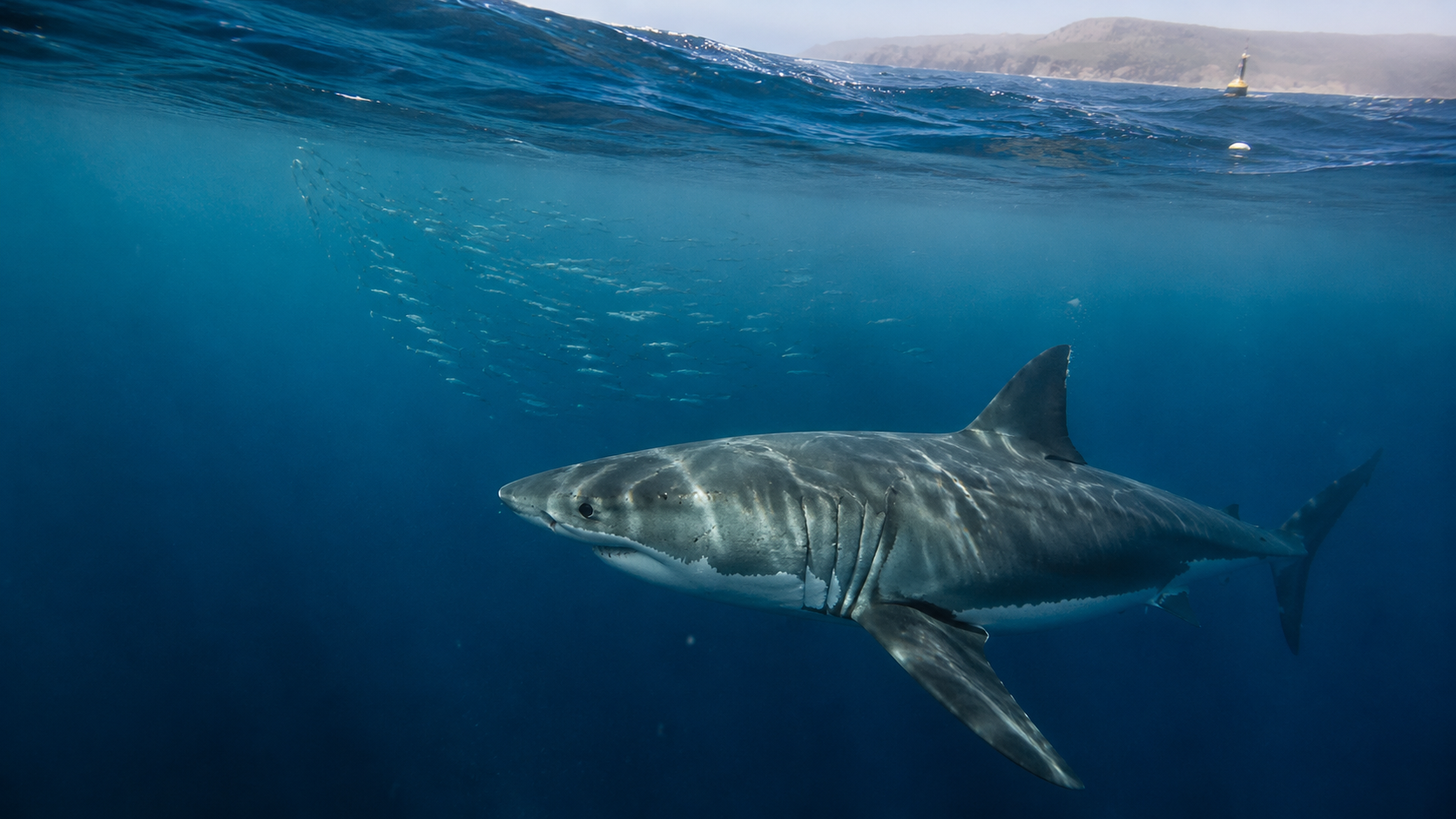
They don’t live in Canada. They return to Canada.
A white shark does not know that it has arrived early.
It does not recognize the first day of summer.
It does not know where Nova Scotia ends, where the Gulf of St. Lawrence begins, or whether a place humans call Canadian habitat appeared on last year’s map.
It follows conditions.
Temperature.
Depth.
Currents.
Prey.
Experience.
Opportunity.
For generations, those conditions have created a broad seasonal rhythm.
White sharks move north as the western North Atlantic warms.
Some enter Canadian waters during summer and autumn.
As northern waters cool, they turn south again.
But the ocean guiding that migration is changing.
Atlantic Canadian waters are warming.
Sea ice is declining in some regions.
Prey distributions are shifting.
Monitoring is improving.
White shark numbers may be recovering from historic declines.
And scientists are detecting more sharks spending more time near the northern extent of their Northwest Atlantic range.
The future could bring earlier arrivals.
Later departures.
More frequent returns.
Greater use of the Gulf of St. Lawrence or waters off Newfoundland and Labrador.
It could also bring unexpected changes that do not fit a simple northward-moving line.
The question is no longer whether the ocean will change.
It is whether we can understand those changes quickly enough to protect the sharks moving through them.
The Future Is Not One Prediction
It is tempting to describe the future of white sharks in Atlantic Canada with a single sentence:
The water is warming, so more sharks will move north.
That is possible.
It is not a complete scientific explanation.
White sharks already tolerate an enormous range of temperatures.
Their regional endothermy lets them retain heat in key swimming muscles and stay active in water that would challenge many other large predatory fishes.
Temperature can help open habitat.
It does not determine whether that habitat contains enough food, suitable depth, productive ocean fronts, safe migratory pathways, or manageable levels of human activity.
Nor does every shark respond to the same conditions in the same way.
A juvenile following fish along the continental shelf may respond differently from a large adult capable of travelling through deep pelagic water.
A shark returning to a familiar feeding area may continue using it even when another region becomes thermally suitable.
A mature female may make reproductive decisions that researchers do not yet understand.
Climate change will not push every white shark north at the same speed.
It will alter the collection of conditions each shark encounters.
The animals will respond individually.
Only after many individual decisions are measured over many years will a population-level pattern become clear.
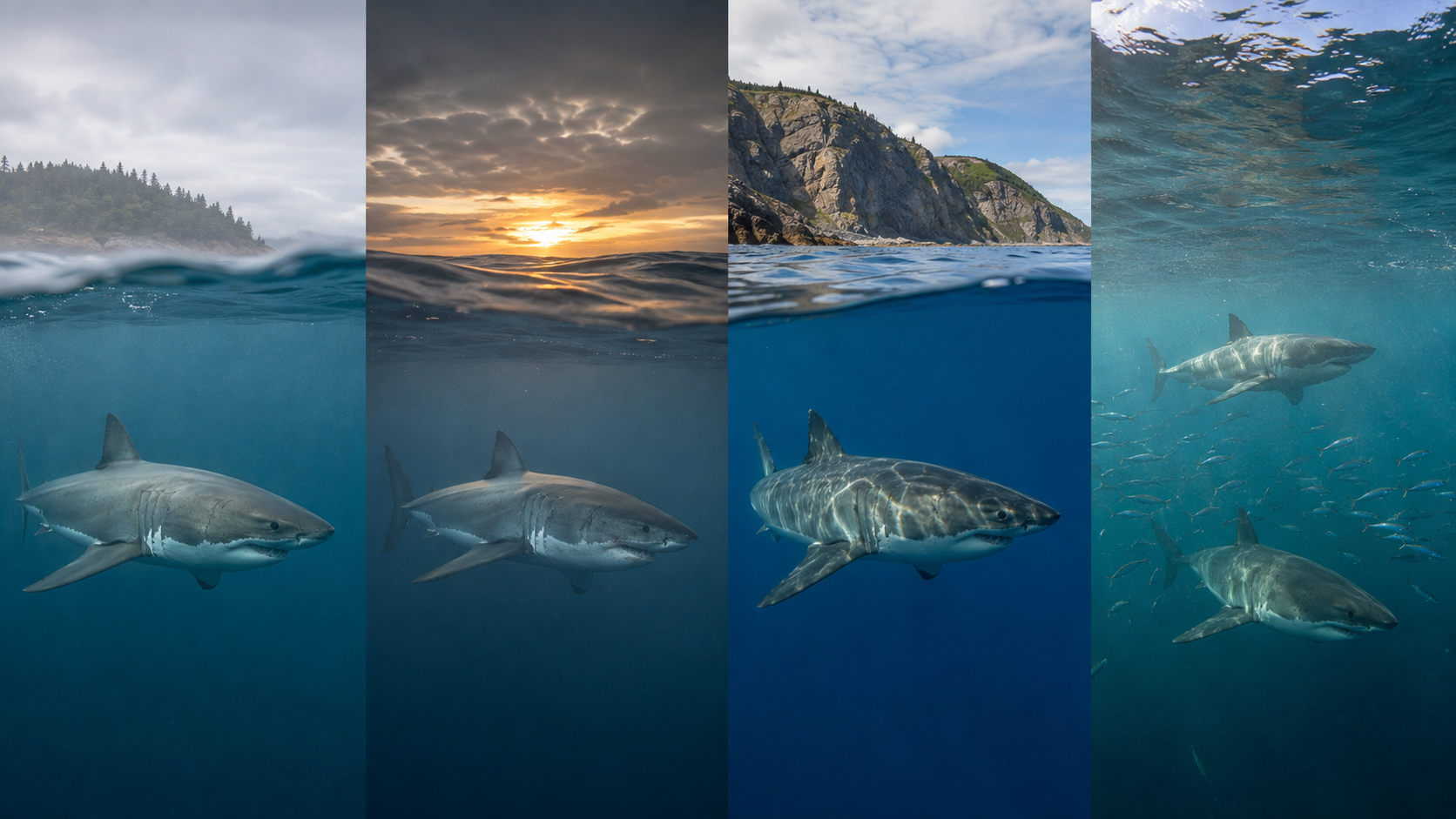
The Atlantic Is Already Changing
The future begins with changes we can already measure.
Fisheries and Oceans Canada describes Atlantic Canada as a changed ocean shaped by long-term warming, natural variability and other environmental pressures.
The change is not uniform.
The Scotian Shelf does not warm the same way as the Gulf of St. Lawrence.
Surface temperature does not tell us what is happening near the bottom.
A warm year may be followed by a cooler one even as the longer trend continues upward.
Currents can carry different water masses into neighbouring areas.
Storms, salinity, oxygen, sea ice and seasonal mixing can all influence the habitat beneath an apparently simple sea-surface temperature map.
This matters because a shark does not experience an annual average.
It experiences the water immediately surrounding its body.
A route that was too cold in June may become usable.
A productive feeding area may remain suitable into November.
A warm surface layer may hide much colder water below.
A marine heatwave may temporarily create conditions that differ sharply from the long-term trend.
The future of white shark migration will be written through these local and seasonal details—not through one Atlantic-wide temperature number.
A Longer Canadian Season May Already Be Emerging
Recent evidence suggests the pattern of white shark use in Atlantic Canada is changing.
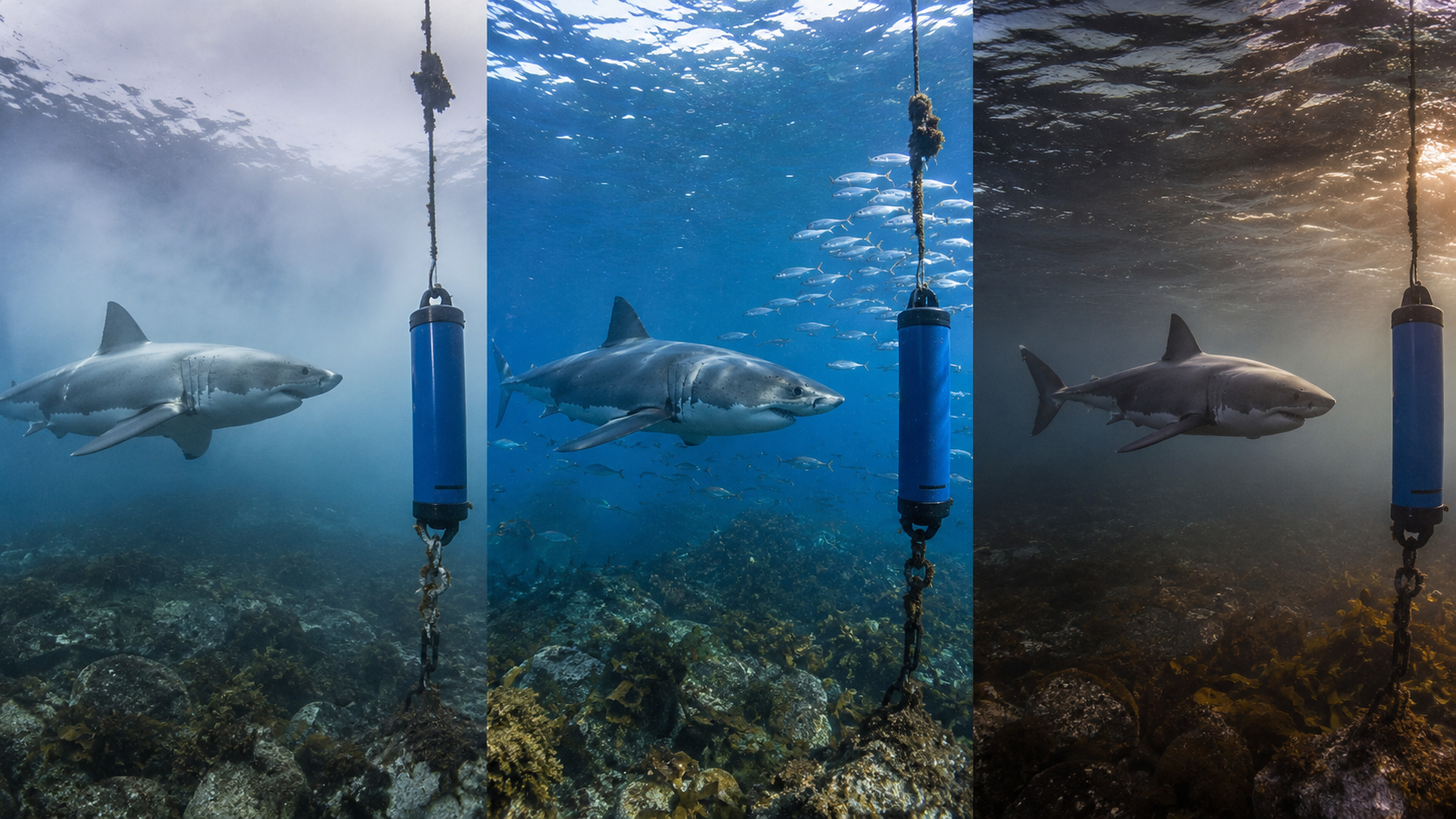
A 2025 study examined detections of 260 acoustically tagged white sharks at long-running Ocean Tracking Network receiver lines near Halifax and in the Cabot Strait.
The researchers found that the probability of tagged sharks migrating past both monitoring lines increased, with the change becoming apparent around 2019 to 2021.
Between 2018 and 2022, estimated migration probability increased from approximately 18 to 44 percent at the Halifax line and from approximately 8 to 28 percent at the Cabot Strait line.
The seasonal detection period also increased—from an estimated 48 days during the earlier 2014–2018 period to approximately 70 days in 2023.
Those findings are important.
They are not a census of every white shark in Canadian waters.
The receivers could detect only sharks carrying compatible acoustic tags and only when those animals passed within detection range.
The number and composition of available tagged sharks changed over time.
The earlier years contained less information, creating uncertainty around the precise size of the trend.
The study nevertheless provides systematic evidence that tagged white sharks have become more likely to migrate into Atlantic Canadian waters and that their detected Canadian season has lengthened.
It does not tell us that climate change alone caused the increase.
Population recovery, prey availability, changing habitat, and differences in which sharks were tagged may all contribute.
The most honest conclusion is also the most useful:
The pattern is changing, and continued monitoring is required to understand why.
Temperature Opens the Door—But Prey Makes the Journey Worthwhile
A white shark does not migrate north simply to occupy warmer water.
It must gain something from the journey.
Food is one of the most likely rewards.
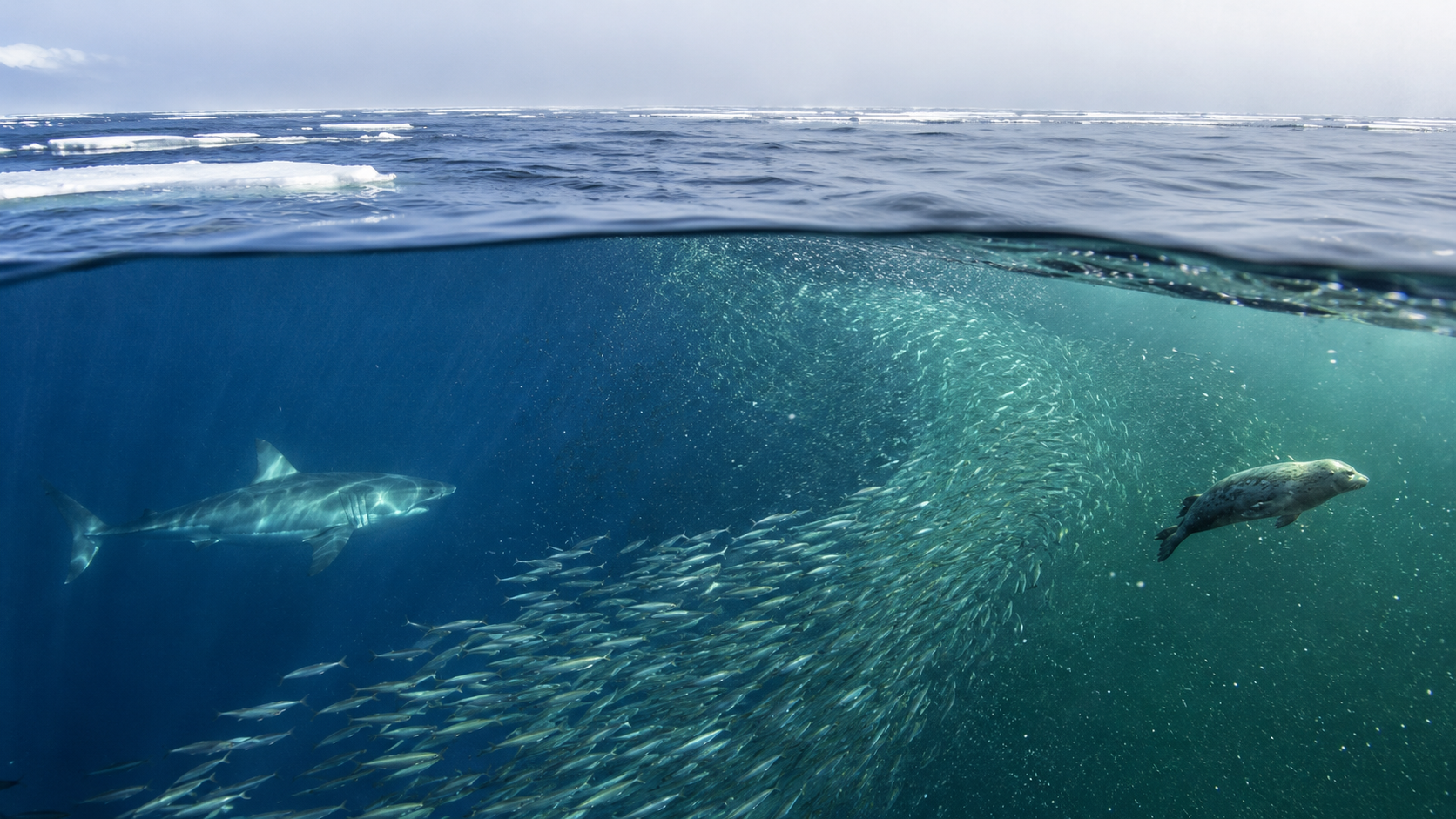
Atlantic Canada contains grey seals, harbour seals, schooling fishes, large pelagic fishes, groundfish, squid and scavenging opportunities.
The importance of each prey type changes with the shark’s size, age, location and experience.
Younger white sharks depend more heavily on fishes and squid.
Larger individuals can hunt and scavenge marine mammals while continuing to consume other prey.
Climate change can alter those food webs.
Some prey may move north.
Some may shift into deeper water.
Others may change the timing of spawning, migration, or seasonal concentration.
A region can become warmer while becoming less productive for a particular predator.
Another can become valuable because several prey species arrive together.
The future shark map may therefore follow a moving prey map more closely than a temperature map.
This is one reason researchers must connect shark tracking with fisheries surveys, seal distribution, prey observations and physical oceanography.
A satellite tag can show where a shark travelled.
It cannot, by itself, explain why the animal chose that route.
More Sharks and More Northern Habitat Are Different Stories
The Northwest Atlantic white shark population experienced a severe historical decline.
The best available evidence suggests that its trajectory may have stabilized or begun increasing after conservation measures introduced in the United States during the 1990s.
That is encouraging.
It is not evidence that the population has fully recovered.
Absolute abundance remains unknown.
White sharks mature late, reproduce slowly, and cannot quickly replace adults lost to fishing or other human causes.
Even gradual recovery, however, could place more sharks on the migratory landscape.
If a relatively stable proportion of a growing population travels north, Atlantic Canada could encounter more sharks without any change in habitat.
If warming increases the proportion of sharks using Canadian waters, northern detections could rise even if the population remains unchanged.
If both occur together, the increase could be stronger.
Then monitoring adds a third influence.
More acoustic tags, receivers, cameras, vessels, and informed observers increase the number of sharks scientists and the public can detect.
Three things can happen simultaneously:
- The population can recover.
- Northern habitat can become more suitable.
- Our ability to observe sharks can improve.
A sighting record cannot separate those processes on its own.
That requires standardized effort collected across years.
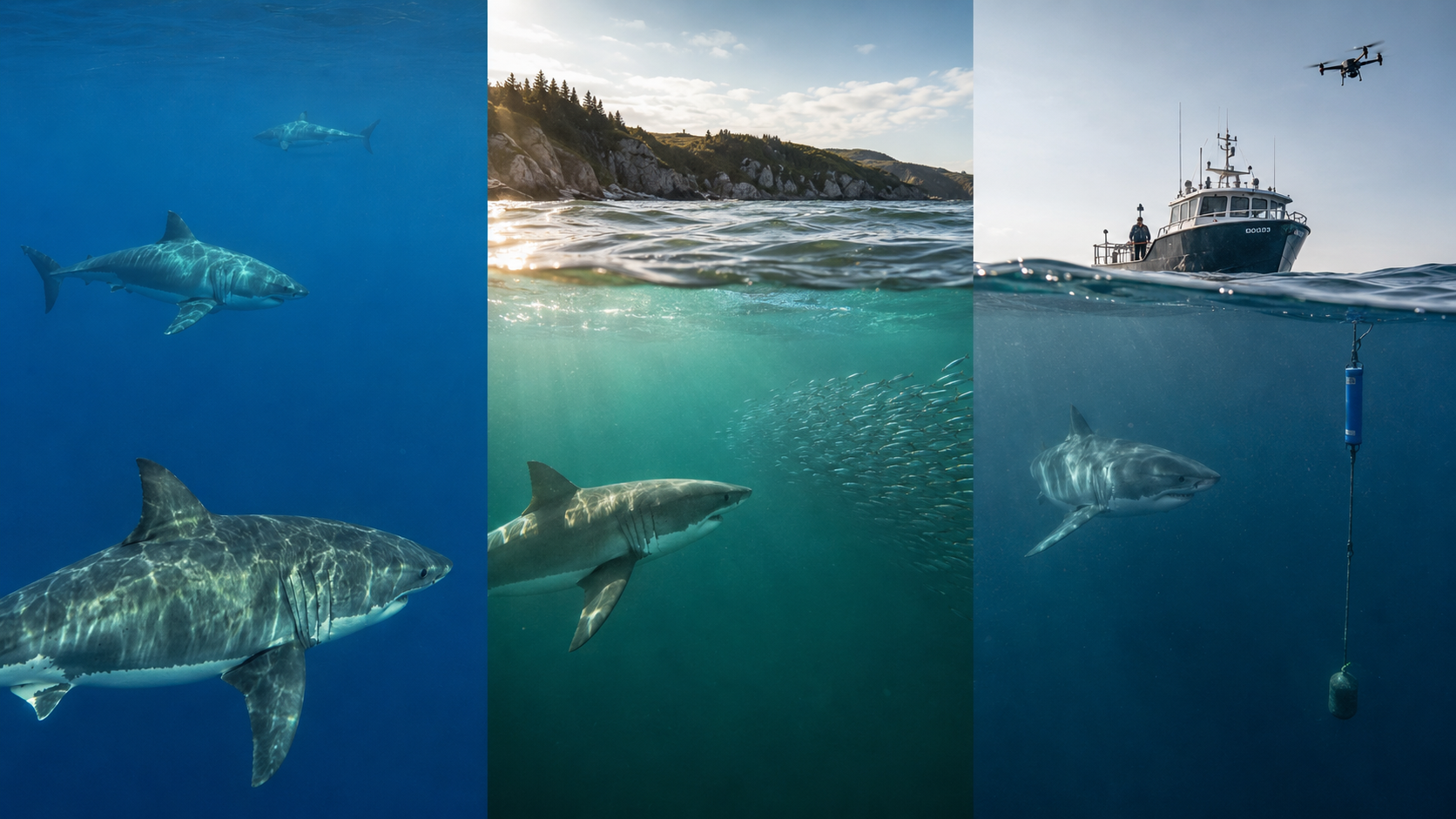
Different Sharks May Have Different Futures
The Northwest Atlantic population does not move as a single unit.
Young-of-the-year sharks use coastal nursery habitat in the Mid-Atlantic Bight.
Juveniles make comparatively shelf-oriented migrations.
Larger sharks expand into deeper and more distant waters.
Some individuals repeatedly return to familiar northern regions.
Others follow different routes.
Sex and reproductive condition may create further differences, although large mature females remain among the least understood members of the population.
This diversity matters.
A warming shelf may expand habitat for younger sharks.
Changing prey could draw subadults farther north.
Large adults may remain able to use broad temperature and depth ranges while responding to food, reproduction, or learned seasonal destinations.
The sharks arriving in Canada twenty years from now may not simply be a larger version of the group arriving today.
The age, size and sex composition could change.
That would affect what the animals eat, where they travel, which fisheries they encounter and how closely their habitat overlaps with people.
Canada must therefore ask more than:
How many sharks are coming?
It must also ask:
Which sharks?
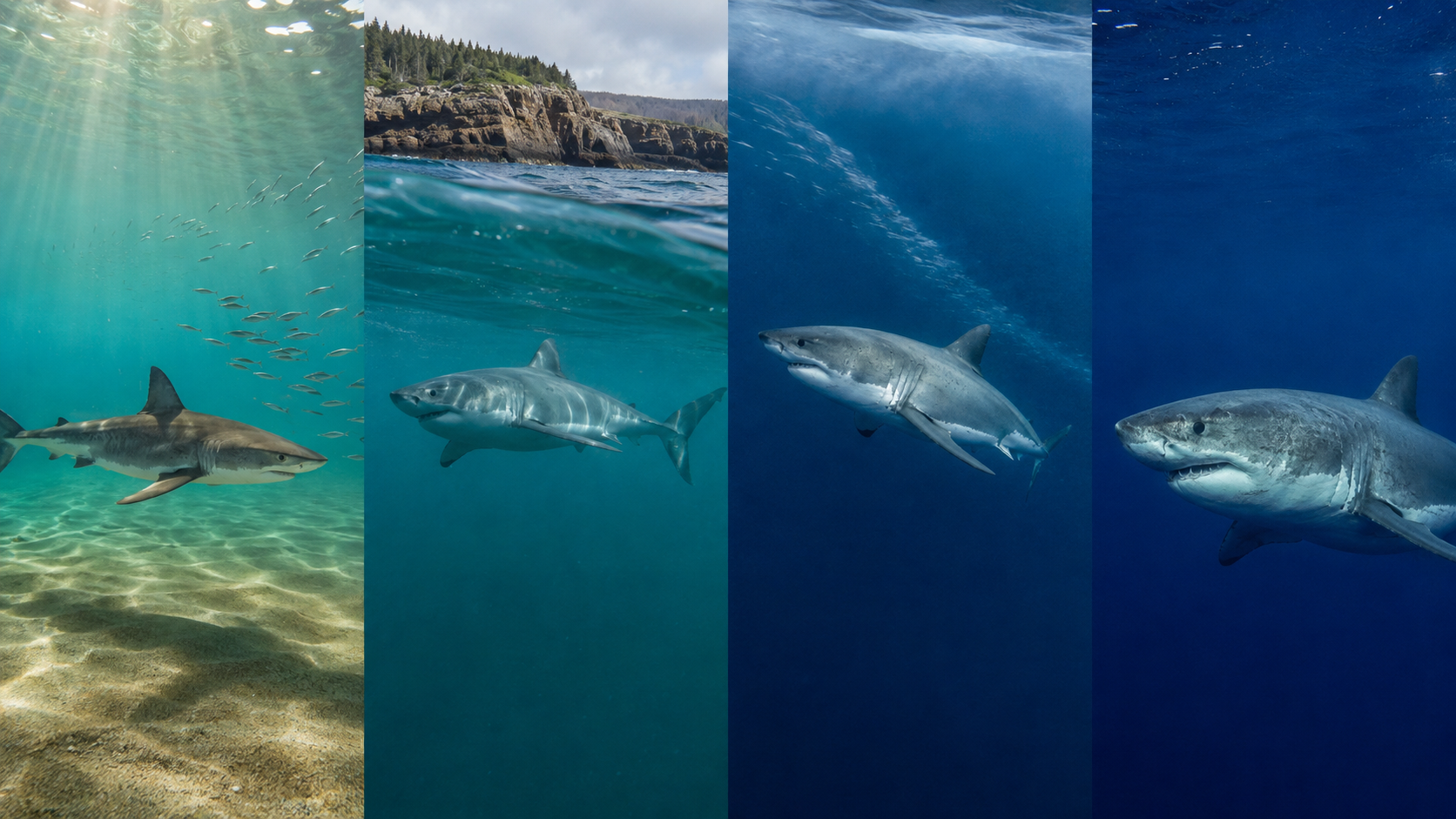
Farther North Does Not Automatically Mean Safer Habitat
A northward range shift can sound like an expansion of opportunity.
Sometimes it may be.
New feeding areas could become accessible.
The seasonal window could lengthen.
Sharks might find productive habitat in regions that were previously too cold for regular use.
But climate change does not improve every part of an ecosystem.
Warming can occur alongside declining oxygen, acidification, altered currents, disrupted prey communities and more frequent extreme events.
A shark may gain access to new habitat while losing the value of another area.
Northern movement may also create new overlap with fishing gear, shipping, coastal development or human recreation.
Fisheries that historically encountered white sharks rarely could begin encountering them more often.
Emergency-response systems developed for yesterday’s coastline may not match tomorrow’s seasonal wildlife.
A newly suitable area is not necessarily protected habitat.
It may simply be a place where a vulnerable animal faces an unfamiliar combination of opportunity and risk.
Canada Is Still Learning Which Habitat Matters Most
Canada’s final recovery strategy for the Atlantic white shark population acknowledges that it cannot yet identify critical habitat.
The available evidence is not sufficient.
Scientists still need to understand:
- Seasonal distribution
- Migration timing
- Relative abundance
- Habitat use by life stage
- The oceanographic characteristics associated with important habitat
- Areas of recurring residency
- Overlap with human-caused threats
This is not an administrative detail.
Critical habitat protection depends on knowing what habitat the species requires for survival or recovery.
For a highly migratory animal, that habitat may not be one small place enclosed by a permanent line.
It could include seasonal feeding areas.
Migration corridors.
Ocean fronts.
Shelf edges.
Areas used primarily by a particular life stage.
And those areas may change as the ocean changes.
Future habitat protection will therefore need to be evidence-based and adaptable.
A static answer may not protect a moving species in a moving ocean.
Monitoring Must Move With the Sharks
Canada cannot understand the future using one technology.
Acoustic receivers can document when tagged animals pass particular locations.
Satellite tags can reveal broad-scale movement and offshore habitat use.
Archival tags can record depth and temperature histories.
Photo identification can recognize returning individuals.
Aerial surveys and drones can observe sharks visible near the surface.
Fisheries reports can document areas of accidental interaction.
Verified public observations can reveal events beyond formal research programs.
Environmental monitoring can connect those records with temperature, currents, prey, and habitat.
Each method sees something different.
Each also has blind spots.
A receiver hears only compatible tags within range.
A satellite location is not a continuous track.
A photograph records one visible moment.
Aerial observation depends on weather, water clarity, and the shark’s depth.
Fisheries data depend on identification and reporting.
The strongest future system will not ask one technology to do everything.
It will connect many partial forms of evidence.
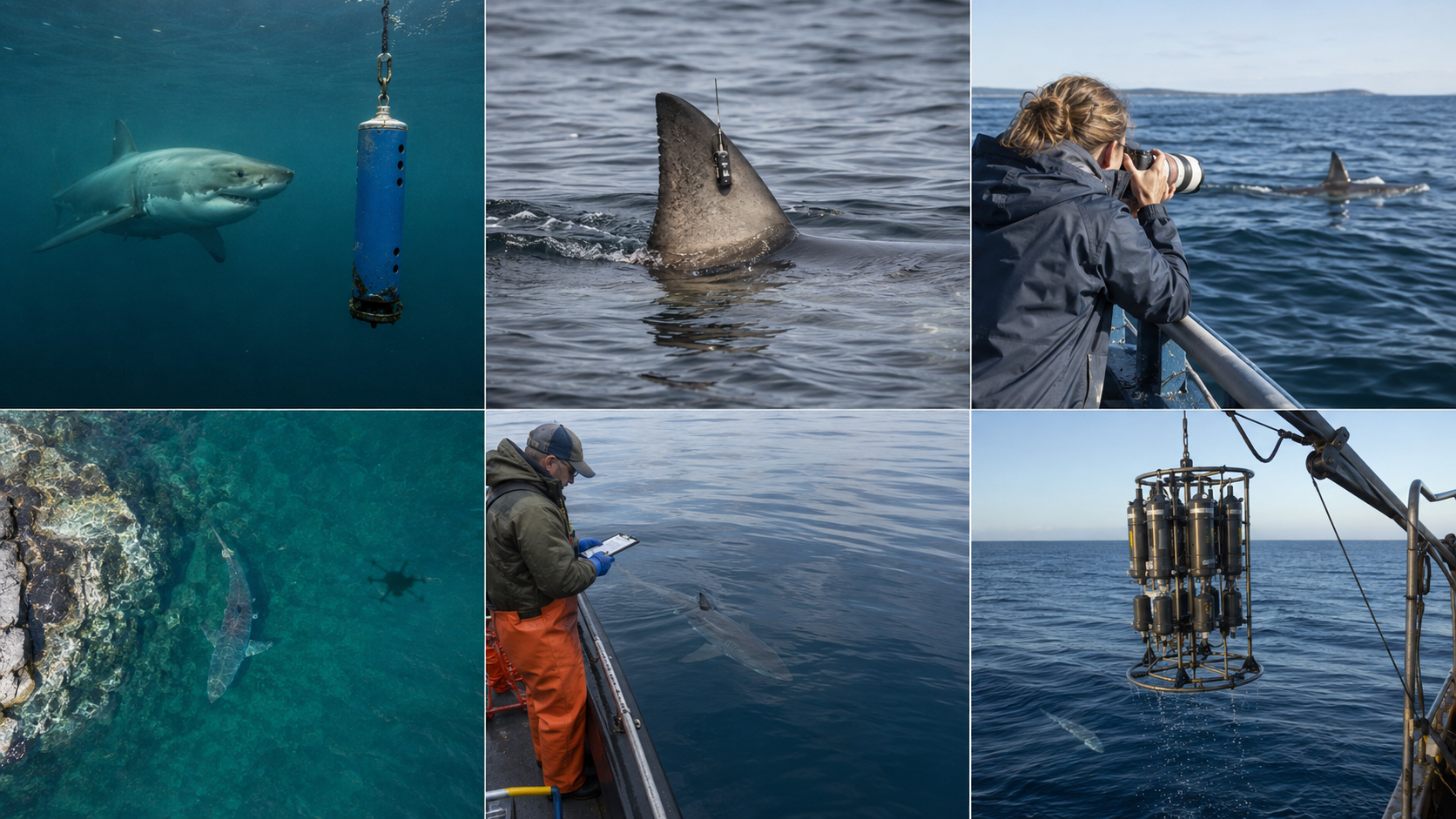
The Map Must Cross Borders
A white shark protected in Nova Scotia may spend winter near Florida.
A juvenile using nursery habitat near New York may later migrate past Cape Cod, Maine, and Atlantic Canada.
An adult can move between coastal and offshore waters governed by different laws, fisheries and management agencies.
Canada controls only part of the animal’s annual journey.
The Canadian recovery strategy therefore emphasizes international cooperation.
That cooperation must extend beyond sharing occasional tag detections.
Researchers need compatible data systems.
Managers need coordinated approaches to bycatch and live release.
Scientists need long-term monitoring across the population’s range.
Conservation measures in one country must not be undone by avoidable mortality in another.
The future of Canada’s white sharks will depend partly on decisions made thousands of kilometers from Canadian waters.
No country owns this population.
Every country along its route shares responsibility for it.
Four Futures Canada Should Be Ready to Recognize
The evidence does not support one precise forecast.
It does support several plausible scenarios.
1. A Longer Version of the Current Migration
White sharks continue using broadly familiar Canadian regions but begin arriving earlier or remaining later.
The map changes little.
The calendar changes more.
2. Greater Movement Into Northern Waters
More individuals pass through the Cabot Strait, use the Gulf of St. Lawrence, or travel toward Newfoundland and Labrador as seasonal conditions become suitable.
Areas with little historical monitoring begin receiving more sharks.
3. More Sharks Using the Same Seasonal Window
Population recovery increases the number of animals entering Canadian waters without dramatically changing migration timing or northern limits.
Existing habitat becomes more heavily used.
4. Redistribution Rather Than Simple Expansion
Prey, currents, and habitat change in ways that make some traditional areas less valuable while creating new areas of concentration.
Sharks do not simply move north.
They reorganize where and how they use Atlantic Canada.
These futures are not mutually exclusive.
Different combinations could occur in different years or among different life stages.
Scenario planning is not about guessing which one will happen.
It is to ensure Canada can recognize change when it occurs.
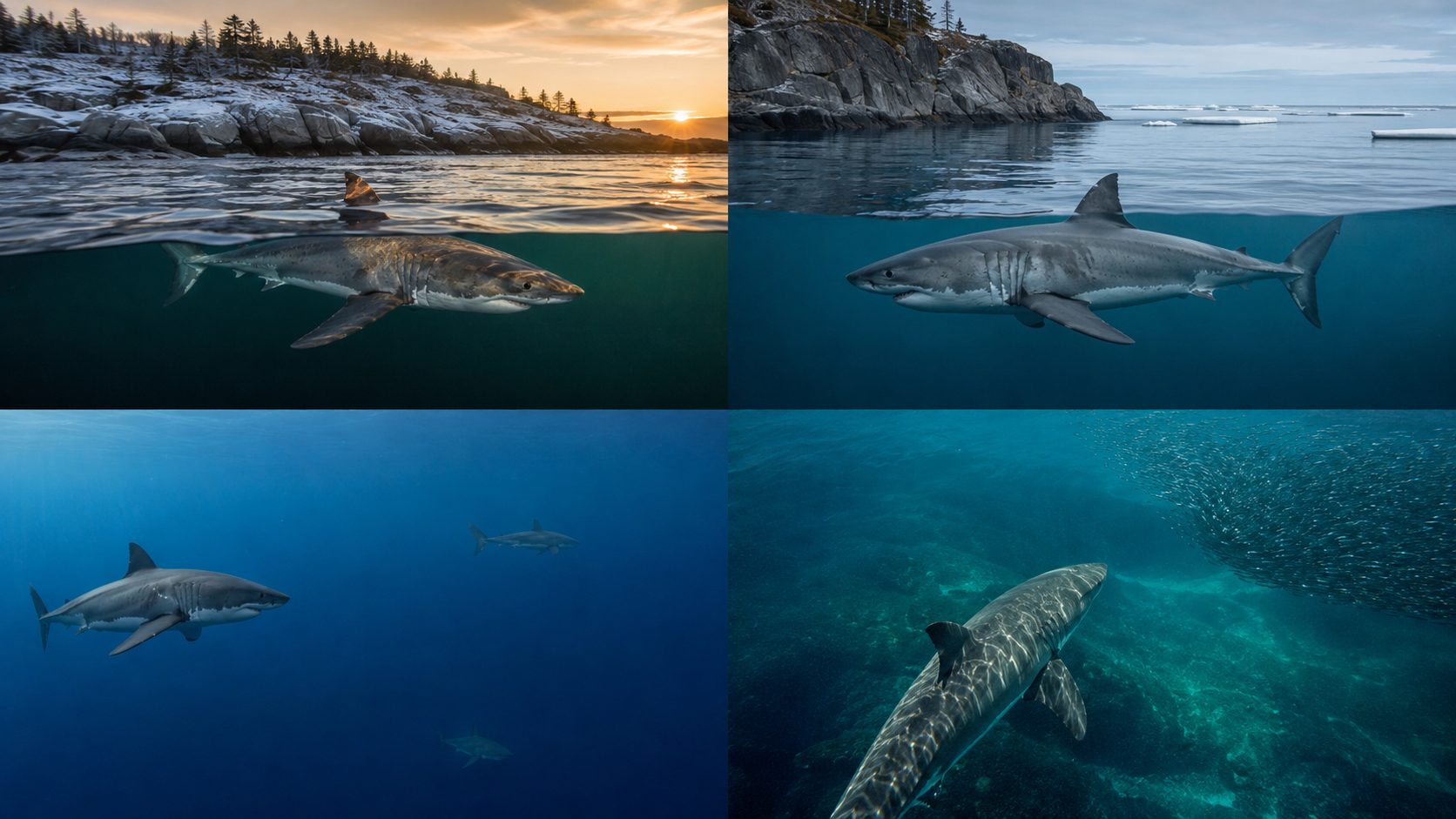
What Canada Can Do Before the Future Arrives
Canada does not need to know exactly what white sharks will do in 2040 before improving how it prepares today.
It can:
Maintain consistent monitoring.
Long-term receiver lines and repeated survey methods are essential for distinguishing a genuine ecological trend from changes in research effort.
Connect shark and ecosystem data.
Movement records become more informative when examined alongside temperature, depth, currents, prey, and fisheries activity.
Improve bycatch reporting and live-release capacity.
Shifting shark distribution could create interactions in places where fishers have little experience with the species.
Build trusted public communication.
Communities should understand what detections can tell them, what technologies cannot see, and how to respond without panic.
Prepare coastal safety systems proportionate to local evidence.
Information, training and emergency readiness can grow before recurring overlap becomes a crisis.
Protect habitat adaptively.
Management must be able to respond when important habitat or migration timing changes.
Strengthen international cooperation.
The Northwest Atlantic population cannot recover through Canadian action alone.
Most importantly, Canada can preserve the humility required to change its conclusions when the evidence changes.
Adaptive management is not uncertainty disguised as policy.
It is policy designed for uncertainty.
The Return Will Become a Measure of Us
The future of white sharks in Atlantic Canada will not be determined by climate alone.
Fishing practices will also shape it.
Research investment.
International cooperation.
Public understanding.
Political patience.
And whether people can accept the return of a large predator without demanding absolute safety from a natural ocean.
If more sharks come north, we will need to learn how to share the water.
If they arrive earlier, we will need to notice.
If they remain later, we will need to adapt.
If their routes shift, our monitoring must shift with them.
And if population recovery slows or reverses, we must recognize that as clearly as we recognize an increase.
The goal is not to produce more shark sightings.
The goal is a healthy population capable of performing its ecological role across its historic range.
Canada is one part of that range.
But it may become an increasingly important part.
SERIES CONCLUSION — THE FUTURE OF THE RETURN
A white shark turns north.
Ahead lies an ocean its ancestors travelled long before we began recording their movements.
Some of the route may be familiar.
Some of it may be changing.
The shark will not explain why it chooses one current, one shelf edge, or one feeding ground over another.
It will simply move.
A transmitter may record the journey.
A receiver may hear its arrival.
A photograph may reveal that the same animal has returned.
Years of evidence may eventually show that the season has lengthened, the range has shifted, or a particular place matters more than we understood.
That is how the future will become visible.
Not as one dramatic moment.
As a pattern.
Across twelve parts, White Sharks in Canada has followed these animals from the southern waters of the Northwest Atlantic into their northern seasonal habitat.
We have examined why they come.
How scientists track them.
Where they feed.
Why some return.
Which sharks travel north.
What remains unknown about mature females.
How climate may reshape their habitat.
Where fisheries and sharks overlap.
And what responsible coexistence could look like.
The final lesson is not that we know what happens next.
It is that we are finally building the tools to observe it.
They don’t live in Canada.
They return to Canada.
The ocean they return to will not remain the same.
Our responsibility is to ensure that they still have the opportunity to return.